
AI in Digital Marketing Is Changing When Clicks Disappear
I remember when ranking on page one was the main goal. Someone would search, click on your site. That was it.
That is not how it works anymore.
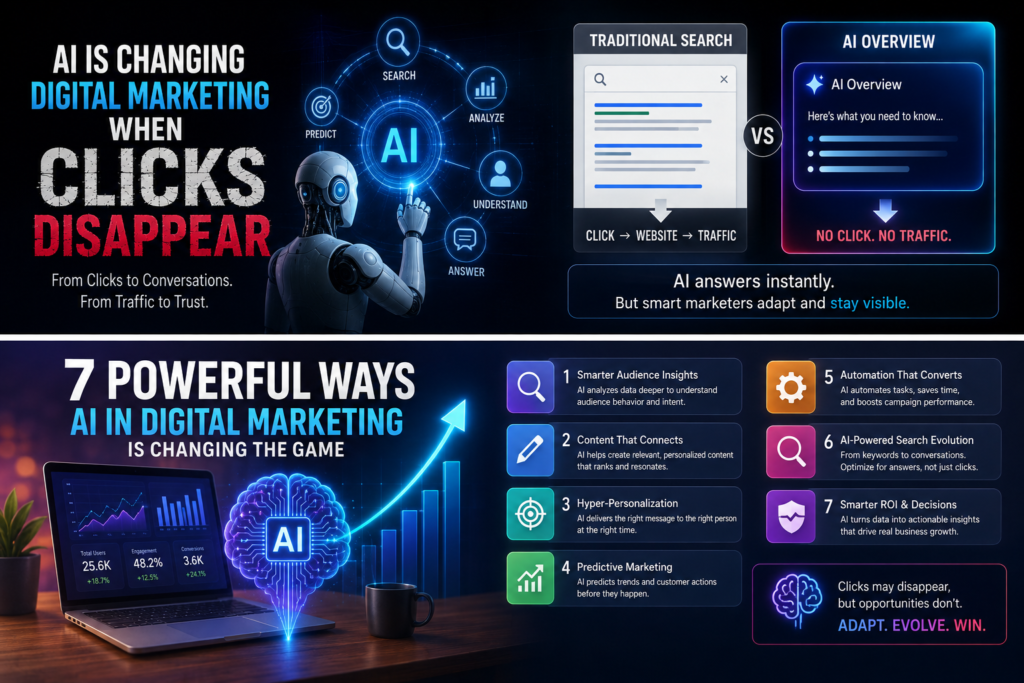
AI in Digital Marketing has changed the whole search experience. Google’s AI Overviews now answer questions right on the results page. No click needed. I noticed this while studying SEO. It changed how I think about content. It is not about being number one. It is about being the answer.This shift makes AI in Digital Marketing an important part of modern SEO strategies.
That is also why I focus on combining SEO, content, and AI-driven strategies in my digital marketing services to help businesses stay visible as search continues to change.
If you are a business owner, marketer, or freelancer and your traffic numbers look off even though your rankings are fine. This is why. Here are seven ways AI is changing search and what you can do about each one.
1. AI Overviews Are Eating the Click
One of the biggest changes AI in Digital Marketing has created is the AI Overview box. For searches, it summarizes the answer from multiple sources, and the searcher gets what they want without scrolling down to your site.
This is what we call “zero-click search”. It is why rankings and traffic are not connected like they used to be. You can rank well. Still see your visits drop.
So do not measure success by rank position alone. Use Google Search Console to track impressions versus clicks. That gap tells you more than position does.
2. Search Intent Now Has a Third Audience: The AI Itself
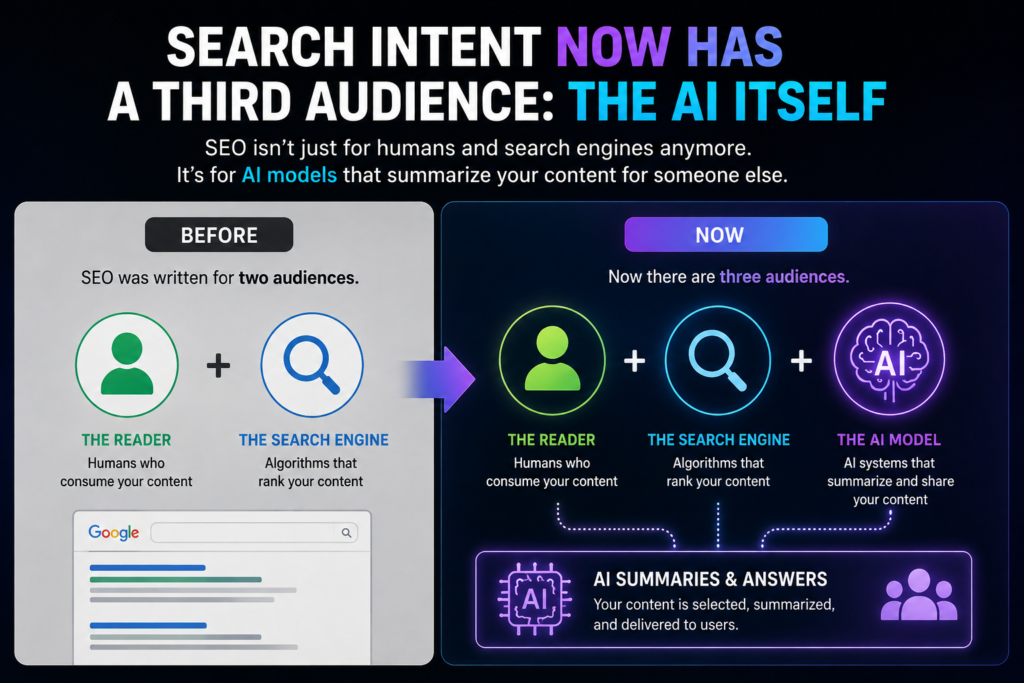
SEO used to be written for two audiences. The reader and the algorithm. Now there is one. The AI model that summarizes your content for someone else. This is where AI marketing strategies need to go beyond keywords.This is becoming a key part of AI in Digital Marketing strategies.
Across my client work, I see a pattern: content that answers the question early and clearly gets pulled into AI summaries more often than content that takes its time.
So do not bury your insight in paragraph five. Say what you mean in the two or three sentences, then explain. Not before.
3. Generative Engine Optimization (GEO) Is a New Layer on Top of SEO
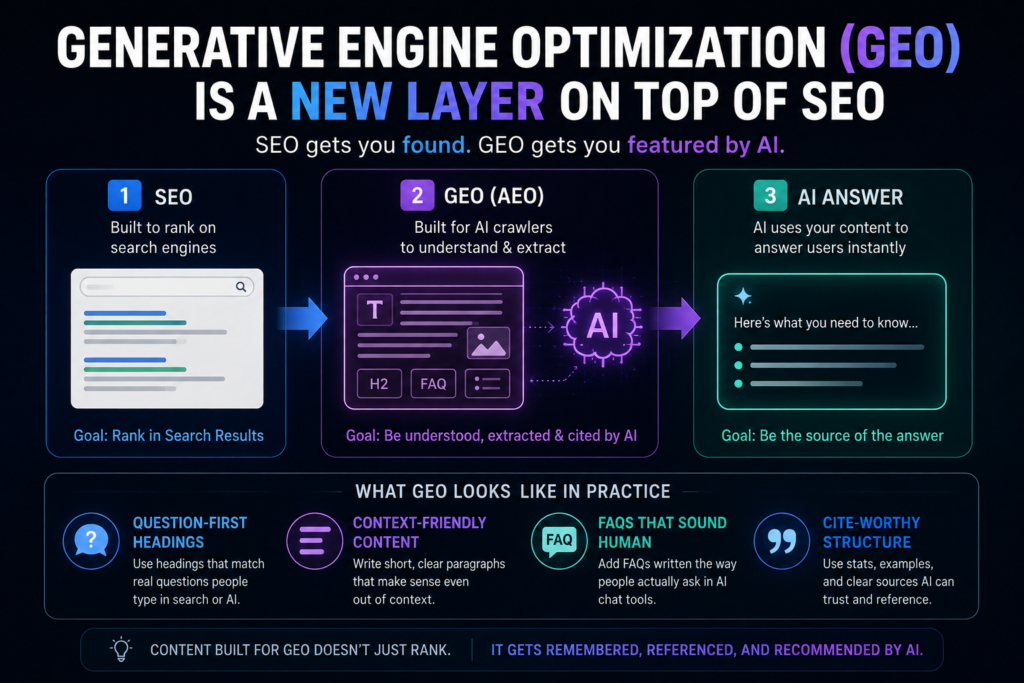
This is a major shift in my AI in Digital Marketing workflow. Alongside SEO, I structure content so AI crawlers can lift and cite it cleanly. Some people call this GEO; some call it AEO. It is about making content work for AI.
In practice, that looks like:
- Headings that double as questions people are actually typing
- Paragraphs that make sense out of context
- FAQ sections written as people talk to AI chat tools
I see a pattern across projects: content built this way gets picked up and referenced more.
4. Keyword-First Content Is Losing Ground
I still see people writing around a keyword of a real question.For AI in Digital Marketing, understanding the user’s actual question is more important than simply repeating a keyword.
A page that stuffs a keyword in ten times reads awkwardly to a human. It gives an AI model nothing to summarize. These systems pull out meaning and intent, not match strings of text.
So flip it. For every keyword, write down the question a real person would type. Answer that question first. The keyword shows up because you are writing normally.
5. Trust Signals Matter More Than Ever
When an AI model picks which sources to cite, it leans toward stuff. Real authorship, accurate claims, evidence. This tracks with Google’s E-E-A-T idea. Experience, Expertise, Authoritativeness, Trustworthiness.
Google’s Search Quality Rater Guidelines use -E-A-T to judge content. That is not a search-engine checkbox. It is how people and AI decide what is worth trusting.That makes trust an important factor in effective AI in Digital Marketing.
Practically, that means examples, named tools, actual numbers, and being upfront about limitations. “Many businesses see results” says nothing. Specificity signals you have done the work.
6. Local and Service-Based Businesses Feel This Differently
If you run a business or offer a service, zero-click search does not hit you the same way. People still need to do something. Book a call, visit a location, request a quote.
This is where structured content still earns its keep. Clear service pages, location details, and a direct call to action give both the reader and the AI system something concrete.
Make sure your key pages answer “what do you offer, where and how do I reach you” in the few lines.For local businesses, AI in Digital Marketing can help turn online visibility into real enquiries and customers.
7. Measurement Itself Needs to Change
If you judge content by click volume, you only see half the picture. Some of your valuable exposure now happens when your brand gets referenced inside an AI answer. No click involved.
Worth tracking:
- Search Console’s impressions-to-click ratio
- Branded search volume over time
- Traffic from AI tools
None of these replace direct traffic, but together they give a more honest read on visibility.
FAQs
“Does AI in Digital Marketing mean SEO is dying?”
No. Search intent still matters; rankings still matter; organic traffic is still valuable. What is changing is that visibility now includes getting cited or summarized by AI.
What’s the difference between SEO and GEO?
SEO is about ranking in search results. GEO is about getting your content understood and cited by AI systems. In practice, the two overlap.
How do I know if AI Overviews are affecting my traffic?
Compare Search Console impressions to clicks. If that gap is widening, that is your answer.
Final Thoughts
The click is not guaranteed anymore… The chance to be trusted, cited, and remembered still is. AI in Digital Marketing is not out to kill good content; it rewards real answers over ranking tricks.
If you take one thing from this and act on it: pick your performing page and rewrite the opening two sentences so they answer the question immediately. That is the most practical starting point for adapting your AI marketing strategies.